- A Paradise for Parents Newsletter
- Posts
- Having Some Fun with My CGM
Having Some Fun with My CGM

Hal Cranmer
April 22, 2026
Two days ago I attached a Continuous Glucose Monitor (CGM) to my right tricep. These cool little devices send a signal to an app on your phone to give you what the name says - a continuous reading of your glucose level.
The monitor updates the reading about every 15 minutes to save battery power. Good thing it does as well. Otherwise I might stare at it as much as people doom scroll on social media.
I used Claude AI to see what I should expect from the readings:
A healthy person without diabetes typically sees relatively stable glucose patterns on a CGM. Here's what to expect:
General ranges:
Fasting (after 8+ hours without food): 70-100 mg/dL
Postprandial (after eating): typically peaks 15-30 minutes after a meal, usually stays under 140 mg/dL
Returns to baseline within 2-3 hours in healthy people
Response to different foods:
High glycemic index foods (white bread, sugary drinks, refined carbs):
Rapid spike within 15-20 minutes
Peak might reach 120-140+ mg/dL
Quicker return to baseline (2-3 hours)
Low glycemic index foods (whole grains, vegetables, protein):
Slower, more gradual rise
More modest peaks (usually 100-120 mg/dL)
Steadier, more sustained elevation
Protein/fat with carbs:
Blunts and delays the glucose spike
Prevents sharp peak
During sleep:
Glucose typically dips slightly and remains stable
Should stay in the 70-100 range throughout the night
No dramatic fluctuations in healthy individuals
During fasting:
Gradual, gentle decline over the first few hours
Then stabilizes as the body maintains glucose through glycogenolysis and gluconeogenesis
Should plateau around 70-90 mg/dL and stay there
Individual variation: Even healthy people show different responses based on exercise, stress, sleep quality, and individual metabolism. Some people spike more with certain foods than others—this is why CGM data can be personally useful even without diabetes, helping identify your own patterns and optimize energy levels.
I am playing around with it to let me know what is actually going on in my body.
Here is what I found so far:
When I first put it on, it was about 10am and I had not eaten. My reading was in the low 90’s.
I didn’t eat most of the day. Around 4pm I was with a lady who rents out her home to family visiting my residents. She gave me some nuts, a protein bar and some tomatoes from her garden.

That raised by glucose a lot. Into the 170’s.
It gradually decreased. I had one other meal that day. It was dry rub pork ribs at a barbecue restaurant. The meat brought up the reading a bit but it stayed in the 80’s and 90’s.
I checked it next when I woke. It was in the low 70’s. Feeling good, I climbed out of bed. All of a sudden the reading climbed into the 90’s. I didn’t eat anything. Just got out of bed.
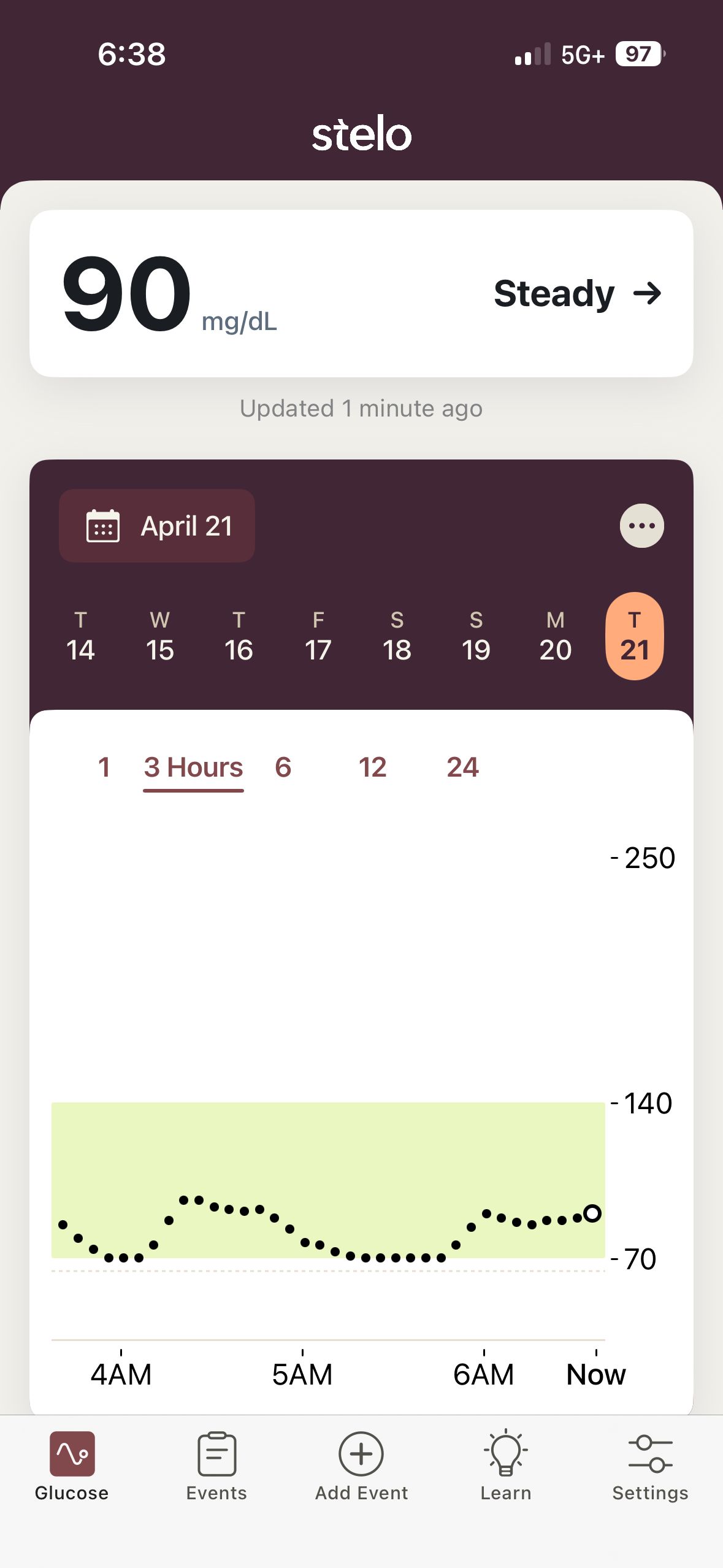
This is called the ‘dawn phenomenon’ or the ‘feet-on-the-floor effect’.
I had a can of sardines for breakfast. The reading barely moved from around 90.
For dinner, I had two hamburgers. I also tried a protein cookie that is very low carb. That didn’t spike the sugar much.
Then I thought I would go for a big spike this morning. All in the name of science I had some Raisin Bran Crunch cereal.
Right on cue, my blood sugar rose to about 200. Fortunately it did come down quickly.
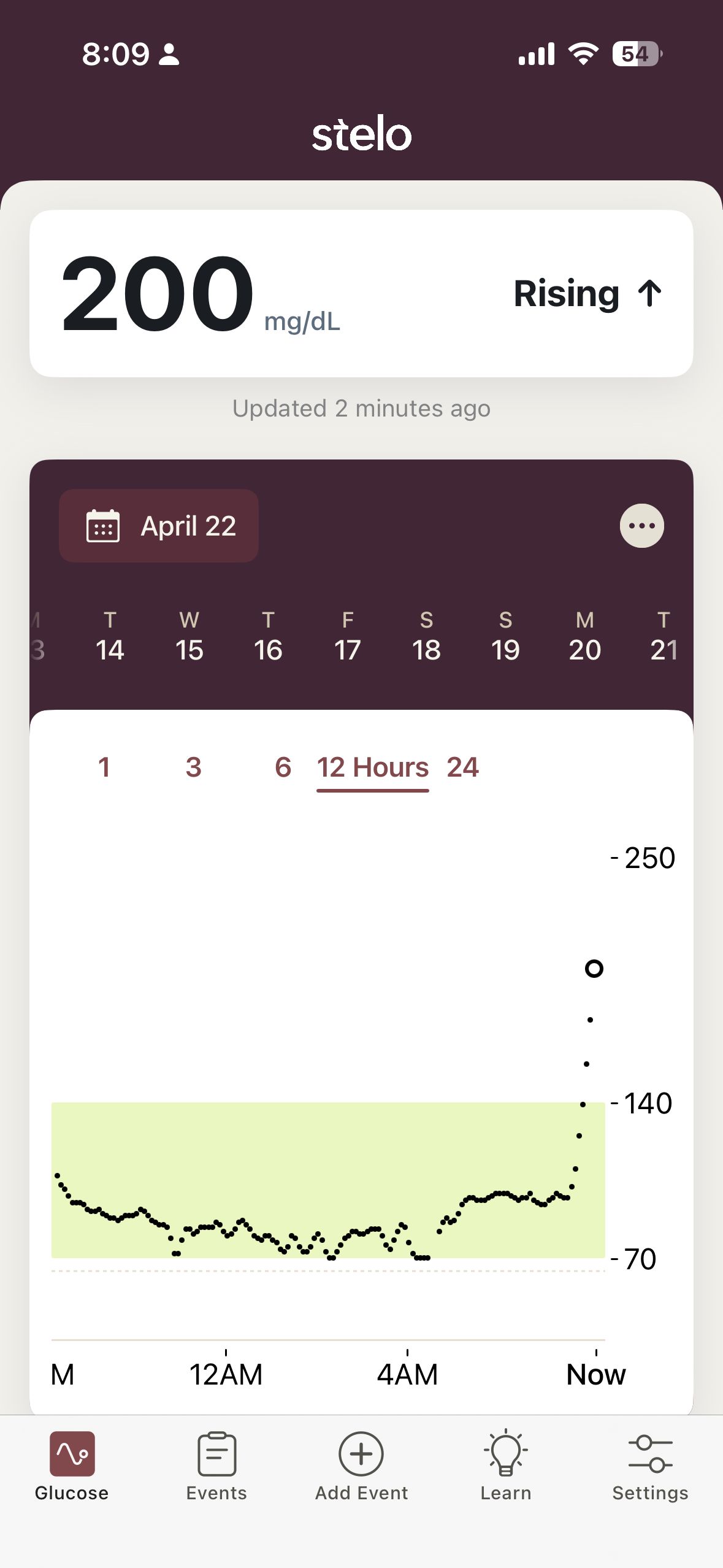
I wanted to illustrate that keto and carnivore diets really do make a difference. And the standard America diet is bad news. I’m probably preaching to the choir. But boy there are a lot of people out there who don’t believe it.