- A Paradise for Parents Newsletter
- Posts
- Thoughts on the New Food Guidelines
Thoughts on the New Food Guidelines

Hal Cranmer
January 16, 2026
You’ve probably heard that the White House recently released the Dietary Guidelines for Americans, 2025–2030. At first glance there’s a lot to be excited about. These guidelines can affect:
Food manufacturers
The restaurant industry
The agricultural industry
The alcohol industry
State and local government organizations
Public schools
Hospitals
Veteran support programs
Military meals
And of course assisted living!
It’s a big deal. And it’s the first serious change since the 1970’s.
There’s much to cheer about. And some issues with it. I thought I would give you some thoughts on how Robert F Kennedy Jr and the rest of HHS did. Starting with the front cover:
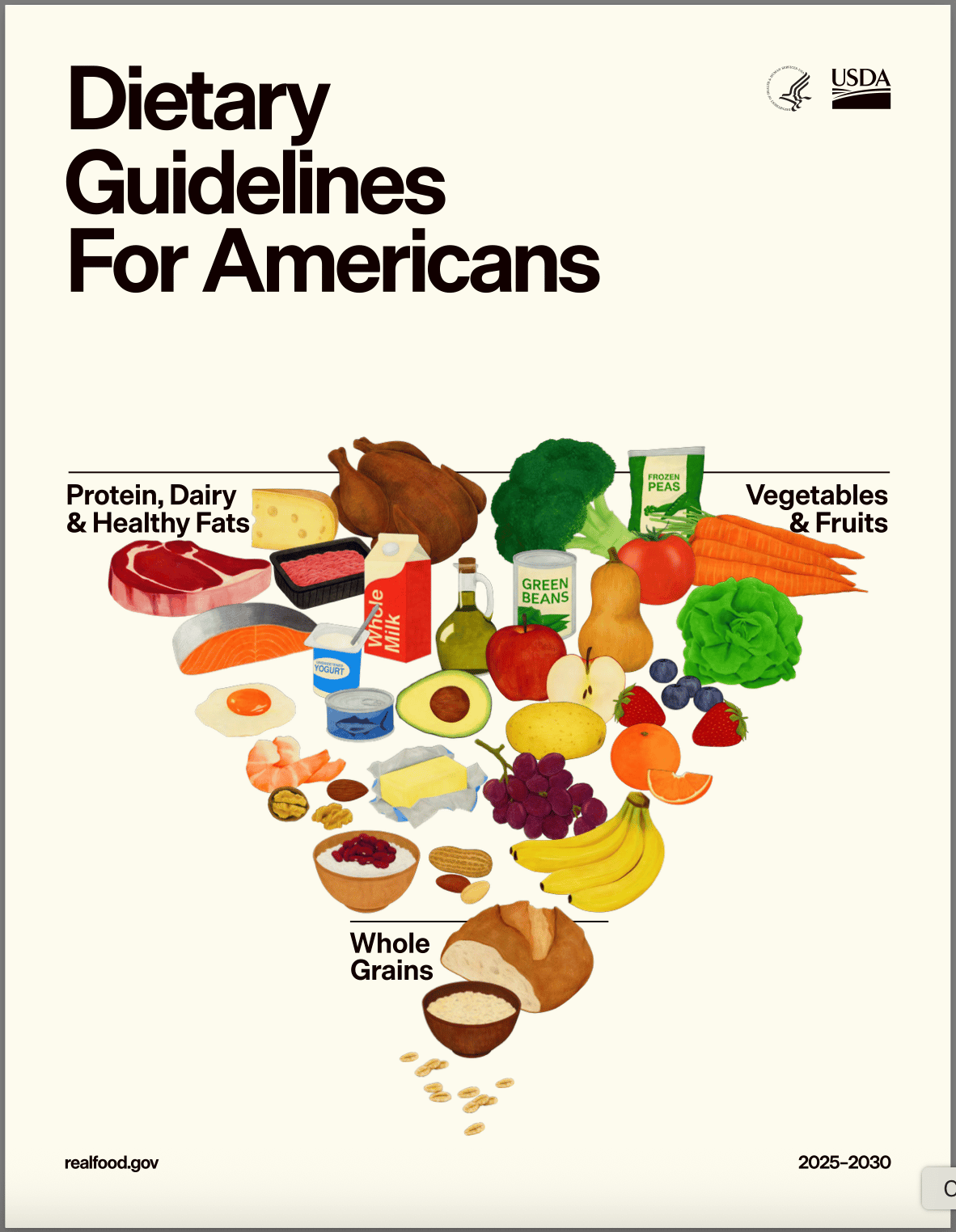
They flipped the food pyramid upside down. This pyramid emphasizes whole food - beef, chicken, fish, and vegetables. Whole grains and cereals are at the bottom of the inverted pyramid indicating that people should consume very little. I love seeing that.
Some other good points include:
Telling people to stay away from processed foods and eat whole foods
Stay away from sugar (including sugar substitutes like fructose, sucrose and maltodextrin)
An emphasis on eating healthy fats and protein
Refined and packaged grain products should be limited
Dairy is making a comeback with emphasis on full-fat dairy with little to no sugar in it
Limit alcoholic beverages
Kids should also eat this good food
Pregnant women should consume meat, eggs and fish like salmon, sardines and trout
Cook in butter or beef tallow
Although I’m not a huge fan of vegetables, I understand it would be pretty complicated politically to exclude them. I’m also not a big fan of fruit and the guidelines seems to emphasize them. Fruit has a lot of natural sugar. Probably ok if you’re young and healthy. Not so much if you’re diabetic, pre-diabetic or insulin resistant which so many Americans are.
They recommend a protein intake of 1.2-1.6 grams per kilogram (2.2 lbs) of body weight. That’s 0.55 - 0.73 grams per pound. It’s a whole lot better than the 0.36g/lb per day the previous guidelines put out. I would like to see more like 1gram/lb per day but I realize a lot of people may think that is unrealistic. People start losing a lot of muscle mass as they grow older. Added protein (along with exercise) can help prevent the decline.
There are some other areas of the new food guidelines that don’t thrill me.
The new guidelines also kept the upper end for salt intake at 2,300 mg/day. Salt is unfairly demonized by the medical industry. Yet if you have to go in an ambulance to the hospital, chances are the EMT will hook you up to a…you guessed it….saline solution. Salt is essential to life. You can exceed these limits
Although they recommend you minimize your sugar intake, they tell you to limit it to 10 grams/meal. That’s 30 grams per day. For reference a Snicker’s Bar is 20g of sugar. Over time that can add up substantially.
And one more thing as long as I’m dumping on the guidelines a bit. They still recommend 2-4 servings of whole grains a day. I recommend zero.
Overall I’m excited that the guidelines have been changed this much. Hopefully a lot will change as a result of this and America’s health will improve. There’s definitely a lot of work to be done. So let’s roll up our sleeves and start evangelizing about the benefits of eating a healthy diet.